

Do I Have CPTSD?
Before we get into the clinical definition of CPTSD, it helps to start with the experience itself. For many people, the most important sign is a constant sense of being on edge. You may startle easily, struggle to trust certain people, or find yourself reacting emotionally in ways that don’t make sense when you look back later.
Sometimes those reactions appear as sudden emotional outbursts. Other times the opposite happens. You might withdraw from the interaction, feel a strong urge to leave, or laugh along when someone makes a joke at your expense even though something inside you feels uncomfortable.
If any of this sounds familiar, you are not alone. These reactions are very common for people living with CPTSD. Later in the article I’ll explain why these responses happen when we look at the survival patterns known as fight, flight, fawn and freeze.
Quick Links
What is CPTSD?
CPTSD often has its roots in childhood. During the early years of life, especially from birth to around the age of seven, children absorb experiences without question. At this stage the brain is still developing and has not yet formed the ability to analyse or put experiences into context.
Because of this, stressful or frightening events will be stored directly in the subconscious mind. A child has very little control over what happens around them, so these memories are often linked with feelings of fear, confusion, or powerlessness rather than understanding.
These experiences may come from what therapists sometimes describe as “Big T” trauma or “little t” trauma, and many people experience a combination of both.
Little t trauma can include things such as emotional neglect, unstable home environments, unpredictable caregivers, or relationships where a child felt constantly criticised or controlled.
Big T trauma usually involves situations where there is a clear threat to physical or emotional safety, such as abuse, violence, or other frightening experiences.
When these stresses happen repeatedly over time, the nervous system can become hyper-stimulated and dysregulated. This survival response can continue into adulthood, even when the original environment is no longer present.
Can CPTSD be formed as an Adult?
Yes, although CPTSD is often linked to childhood experiences, it is possible to develop it as an adult. Any prolonged experience where there is threat to your person or mental wellbeing, such as domestic abuse, kidnapping, war or being trapped in a cult.
Any situation where someone is exposed to prolonged fear, threat, or psychological harm can create the conditions for complex trauma. This might include experiences such as domestic abuse, kidnapping, war, human trafficking, or being trapped in a controlling group or cult. Shorter experiences can create PTSD.
What these situations have in common is a sustained sense of danger combined with an inability to escape. When a person is exposed to this kind of environment for a long period of time, the nervous system can adapt by remaining in a constant state of alert.
However, in practice many people with CPTSD have layers of trauma across different stages of life. Someone may have experienced instability or emotional harm in childhood and then later find themselves in abusive or controlling relationships as an adult.
In these cases, recovery often involves unravelling the different layers of experience so the nervous system can begin to relearn what safety feels like.

What Are The Symptoms of CPTSD?
The symptoms of CPTSD can vary widely, but many of them revolve around the survival responses known as Fight, Flight, Fawn, and Freeze. There is also another two categories emerging in CPTSD called Fine and Flop.
The feelings that arise during these survival responses are often described as emotional flashbacks. In simple terms, when something triggers the nervous system, the body and mind can replay the feelings connected to the original trauma.
Unlike PTSD flashbacks, these experiences do not usually involve clear memories or images. Instead, a person suddenly feels the same fear, shame, panic, or helplessness they experienced in the past, even though the current situation may be completely different.
Because there is no obvious memory attached, emotional flashbacks can feel very confusing and difficult to understand.
When someone has lived through long periods of stress or trauma, both the body and the mind can become sensitive to internal thoughts and external triggers. Situations that might seem ordinary to others can activate the nervous system and bring these survival responses online.
Most people tend to have one or two responses that appear most often, with the others showing up occasionally. For example, someone might usually respond by shutting down, suppressing their emotions, or trying to keep the peace by fawning. At other times, they may suddenly react with anger after holding in frustration for a long time. All types display hyper-vigilence, which is constantly monitoring for threat, and nervous system dysregulation.
These reactions can feel confusing or even embarrassing when they happen, but they are very typical for people living with CPTSD. They are survival responses that developed at a time when the nervous system was trying to protect you. Understanding this can help reduce the guilt or self-judgement that many people carry.
Here’s a breakdown of the various survival responses broken down by category. If you’re currently experiencing CPTSD symptoms, please use this list to validate your experience and reach out for help, rather than lapse into self-judgment – it’s not your fault, but you can do something about it.
Fight
- Anger or Irritability
- Defensiveness
- Controlling Behaviour
- Blaming Others
- Argumentative Responses
- Sudden Emotional Outburts
Flight
- Overworking
- Perfectionism
- Restlessness
- Difficulty Relaxing
- Overthinking
- Constant busyness
Freeze
- Emotional Numbness
- Dissociation or Shutdown
- Procrastination & Decision Paralysis
- Withdrawal
- Feeling Stuck
- Low Motivation
Fawn
- People Pleasing
- Difficulty Saying No
- Over-apologising
- Conflict avoidance
- Prioritising Others' Needs
Fine
- Appearing calm while struggling internally
- Hiding distress from others
- Saying "I'm fine" when you're not
- Functioning well in public, but collapsing in private
- Suppressing emotions to stay in control
- Keeping everything together for everyone else
Flop
- Physical Collapse
- Extreme Exhaustion*
- Feeling unable to move or act
- Disconnection from surroundings
*Long-term nervous system stress can sometimes resemble Chronic Fatigue Syndrome and may involve Mast Cell Activation (MCAS).
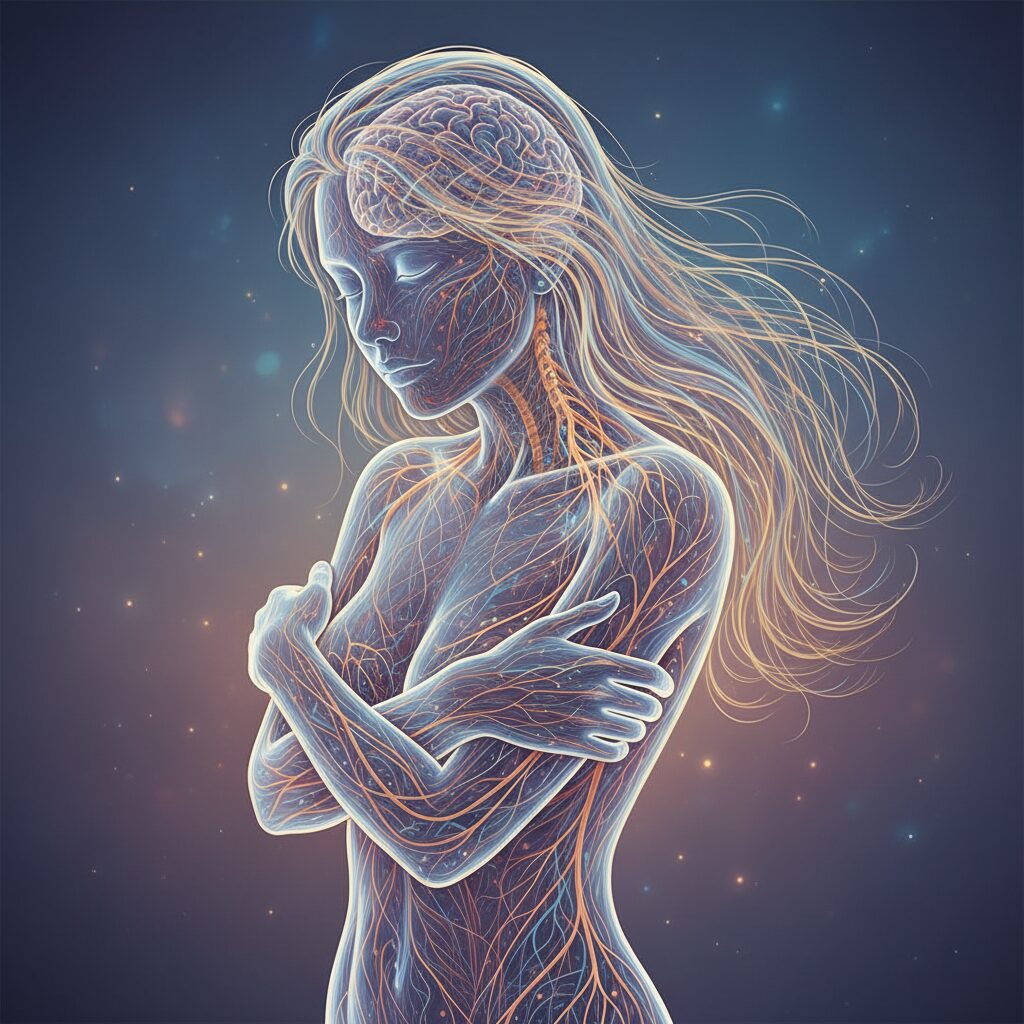
How CPTSD Affects The Nervous System
When a person is exposed to long periods of stress or abuse, the nervous system learns that constant alertness is necessary for survival. Over time the body begins to assume that staying in a state of fight or flight is the safest option.
The amygdala, which acts as the brain’s threat detection system, becomes more active, while areas such as the prefrontal cortex and the hippocampus, which help with memory, reasoning and decision making, become less dominant. This is one reason people with CPTSD can find it harder to think clearly or make decisions when they feel triggered.
But the effects are not limited to the brain. When the nervous system spends long periods in survival mode, the stress response spreads throughout the body. This can affect heart rate, blood pressure, sleep, digestion and immune function. Some people also experience chronic pain, inflammation, or persistent fatigue.
This is also why triggers can feel so powerful. When something reminds the nervous system of past danger, the body reacts automatically, even if the current situation is safe. The response happens faster than conscious thought.
The encouraging news is that the nervous system can learn safety again. Practices such as meditation, somatic exercises, and supportive therapy or coaching can help the body gradually move out of fight or flight and return to a calmer rest and digest state.
Learning how to calm the nervous system is often the first step in recovery from CPTSD.
How CPTSD Affects Relationships and Daily Life
Living with CPTSD can have a significant impact on how you relate to the world and the people around you. Survival responses such as fight or flight, along with emotional flashbacks, can change the way conversations and relationships are perceived, sometimes even with people you care about deeply.
This can lead to volatility with friends, partners, and work colleagues. Many people find themselves struggling to trust others while also experiencing feelings such as fear of abandonment, low self-esteem, or a lack of confidence in social situations.
When the nervous system is chronically stressed, everyday environments can also become overwhelming. Busy places such as supermarkets, large crowds, or noisy public spaces can trigger sensory overload and make it difficult to stay regulated.
Over time this can lead to avoiding social situations altogether, cancelling plans, and gradually becoming more socially isolated. Many people with CPTSD also feel confused and embarrassed when situations, that seem manageable for others, feel overwhelming to them.
Am I An Empath or Do I Have CPTSD?
Many people who have CPTSD also wonder whether they might be an empath. The two experiences can sometimes look similar on the surface because both involve being highly sensitive to the emotions and behaviour of others. The reality is that you may be experiencing both.
When someone grows up in an unpredictable or unsafe environment, the nervous system often becomes hypervigilant. Children learn to read subtle signals such as tone of voice, body language, and emotional shifts in order to stay safe. Over time this can create a heightened awareness of other people’s moods and reactions. Because of this, some people with CPTSD feel as though they are absorbing the emotions of those around them.
At the same time, some people are genuinely empathic or highly sensitive people (HSPs). Someone may naturally be more sensitive and intuitive while also developing hypervigilance through difficult life experiences. It would make sense that anyone with a natural ability to sense other people’s energy would find growing up in an adverse environment especially challenging.
When the nervous system begins to heal and move out of constant fight or flight, many people notice that their sensitivity changes. The overwhelming stress responses begin to settle, and the same awareness that once felt exhausting can become a source of insight, empathy, and connection with others. Many people also find that their empathic abilities widen, allowing them to focus on the positive energy around them as well as the negative. As the nervous system calms, it can become easier to reconnect with intuition and your Higher Self, which will lead you naturally to your life purpose.
Not everyone with CPTSD identifies as an empath. But many people who see themselves as empaths discover that unresolved trauma has been keeping their nervous system in survival mode. As those patterns begin to unravel and personal and energetic boundaries grow stronger, it often becomes easier to experience this sensitivity as a strength rather than a burden.
Why have I received a different diagnosis than CPTSD?
Many people with CPTSD spend years receiving other diagnoses before complex trauma is recognised. Clinicians may diagnose anxiety disorders, depression, PTSD, or sometimes Borderline Personality Disorder because these conditions describe some of the symptoms that people experience.
Part of the reason for this is structural. CPTSD is recognised in the International Classification of Diseases 11th Revision (ICD-11) published by the World Health Organization, but it has not yet been included as a separate diagnosis in the Diagnostic and Statistical Manual of Mental Disorders (DSM), which is widely used in the United States.
Because the DSM is closely tied to insurance and prescribing systems in the US, clinicians sometimes have to record a diagnosis that already exists within that framework in order for treatment to be approved. As a result, many people with complex trauma are treated under labels that describe the symptoms but do not fully explain the underlying cause.
We have a similar problem in the UK, NHS clinicians use the ICD-10, which does not yet include CPTSD as a formal diagnosis, however we expect the updated manual to be rolled out in 2026.
When people eventually learn about CPTSD, it can bring a great deal of clarity. Patterns that once felt confusing or shameful begin to make sense as long-term survival responses.
Can I Recover From CPTSD?
Yes, recovery from CPTSD is possible. The first step is learning to regulate your nervous system through practices such as meditation, somatic exercises, or calm creative hobbies like painting, singing, or dancing. Anything that helps bring you out of your head and back into your body can be beneficial.
Movement is particularly helpful because it encourages neuroplasticity, the brain’s ability to rewire and rebuild. As the nervous system begins to settle, the next step is to explore your life experiences and identify patterns in your emotional flashbacks and triggers. Over time this allows you to respond to the world more consciously rather than reacting automatically from survival mode.
My Story
How do I know this works? Because I lived with CPTSD for many years. My own recovery led me to study trauma and the nervous system in more depth and eventually retrain as a coach so I could help others do the same.
In my thirties, I tried tradition therapy and counselling, but each time I tried a new therapist I eventually ran out of things to say. It felt like I was going over the same stories again and again until I became too embarrassed to continue. Eventually my nervous system reached what I now recognise as the “Flop” response, and I fell into chronic fatigue.
That experience led me to start researching chronic illness and its connection to the nervous system. I began learning about narcissistic abuse, childhood trauma, and the ways long-term stress affects the body and mind. Over time I realised that recovery from CPTSD is not about returning to the person you were before trauma. For many people, especially when those experiences happened early in life, healing becomes a process of building something new.
Over the years I developed a process that brings together the steps that helped me most. I call this process The Empowered Path, a six-step framework designed to help people move out of survival mode and build a calmer, more connected life.
Final Thoughts
If you recognised yourself in parts of this article, you’re not alone. Many people live for years feeling confused by their reactions, wondering why situations that seem manageable for others can feel overwhelming to them.
CPTSD develops when the nervous system spends too long in survival mode. The patterns that formed during that time were not weaknesses – on the contrary you were very strong. This was how your mind and body tried to protect you.
Recovery is not about going back to who you were before trauma. For many people, especially when the experiences happened early in life, that version of themselves never had the chance to fully develop.
Instead, recovery is about creating something new. As the nervous system begins to settle, people often discover parts of themselves that were buried under years of stress. Confidence grows, intuition becomes clearer, and life begins to feel more stable and connected.
It is possible to build a calmer, more grounded way of living, even after years of survival mode.